
“Atlanta’s Old Growth Model Is Dead — Here’s What Comes Next”
Jenise Flye
10/3/2025
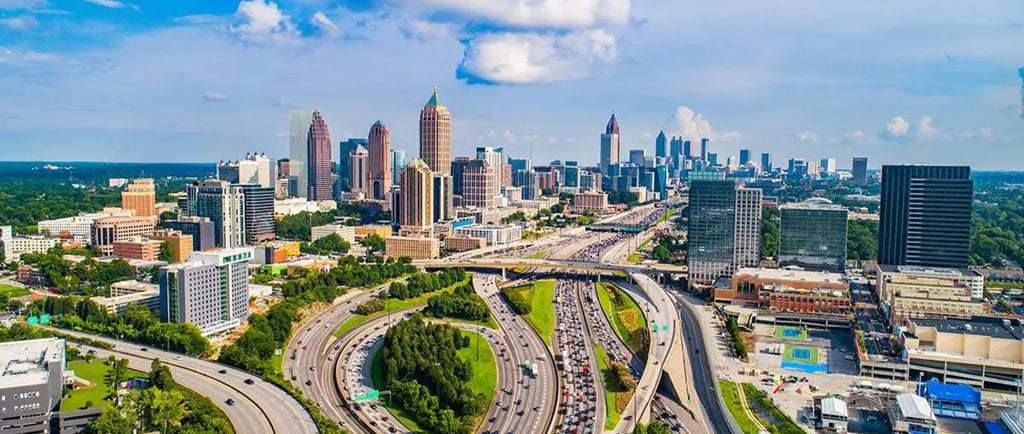
The End of Atlanta’s Old Growth Model: What Comes Next?
For decades, Atlanta’s growth story has followed the same playbook: attract new residents, build more suburbs, and measure success by the number of people moving in. That strategy worked — for a while. But today, the signs are clear: the old model is running out of steam.
Between 2023 and 2024, more people left metro Atlanta than arrived. That doesn’t mean the city is failing, but it does force us to ask a hard question: how should Atlanta define growth in the future?
Why the Old Growth Formula is Breaking Down
Three powerful challenges are colliding, making the old development model unsustainable:
1. Rising inequality
Atlanta’s development boom created jobs and attracted major companies, but wage growth for everyday workers has lagged. With wealth concentrated at the top, housing costs have skyrocketed, pushing affordability further out of reach.
2. Shrinking land supply
Decades of expansion have consumed most easily developable land. New projects now focus on infill, but small, fragmented parcels are more expensive to build on. The result? Higher costs per unit and too many apartments priced beyond what local residents can actually afford.
3. Density without transit
Packing more people into limited space without reliable transit only worsens congestion. Understandably, neighborhoods push back when they feel growth just means more cars and traffic on already stressed roads.
Together, these issues form a cycle: rising inequality drives up housing costs, land scarcity raises prices further, and lack of transit makes density politically unpopular.
A New Path Forward
If Atlanta wants to thrive in the decades ahead, it will need a new growth model — one focused on equity, sustainability, and regional collaboration. Here’s what that could look like:
Build permanent affordability. Invest in community land trusts, city-owned mixed-income housing, and other tools to keep housing affordable for generations, not just a few years.
Pair density with transit. Expand MARTA, invest in Beltline rail, and make transit frequent and reliable. Without it, higher density will only feel like overcrowding.
Create local wealth. Support co-ownership models in housing and small businesses so residents can stay rooted in their communities as they grow.
Think regionally. The City of Atlanta is only a fraction of the metro area. Surrounding counties and the state must align policies to make real progress.
The Bottom Line
Atlanta’s old growth engine — sprawl and car-centric development — no longer guarantees prosperity. The city now faces a choice: adapt to new realities with smarter, more equitable policies, or risk being defined by unaffordable housing, worsening inequality, and endless traffic.
The opportunity is here. If Atlanta can shift its mindset and invest in the right priorities, it can build a growth model that works not just for today, but for future generations.
This post is inspired by Gregory Randolph’s article, “The end of the old Atlanta growth model,” originally published in Saporta Report. The ideas here are summarized and reinterpreted in my own words for blog readers.
Your trusted partner in Atlanta real estate.
jenise flye
Lets work together!
jflye@renterswarehouse.com
404-939-3128
© 2025. All rights reserved.
RWATL, LLC, d/b/a Renters Warehouse - Atlanta, located at 695 Pylant Street, Suite 223, Atlanta, GA 30306, is a duly licensed real estate brokerage, with a license in good standing in the state of Georgia
Broker Name: Steven Tingas ; Company Name: RWATL, LLC d/b/a Renters Warehouse - Atlanta
Broker ID or License No.164394 ; Company ID or License No. H-65205